
Running a master distributor | Kevin Short of ORS Nasco
In this episode, Kevin Short breaks down ORS Nasco's strategy as a master distributor including their PE journey, how they partner with distributors and manufacturers, and how they've sharpened their value prop.
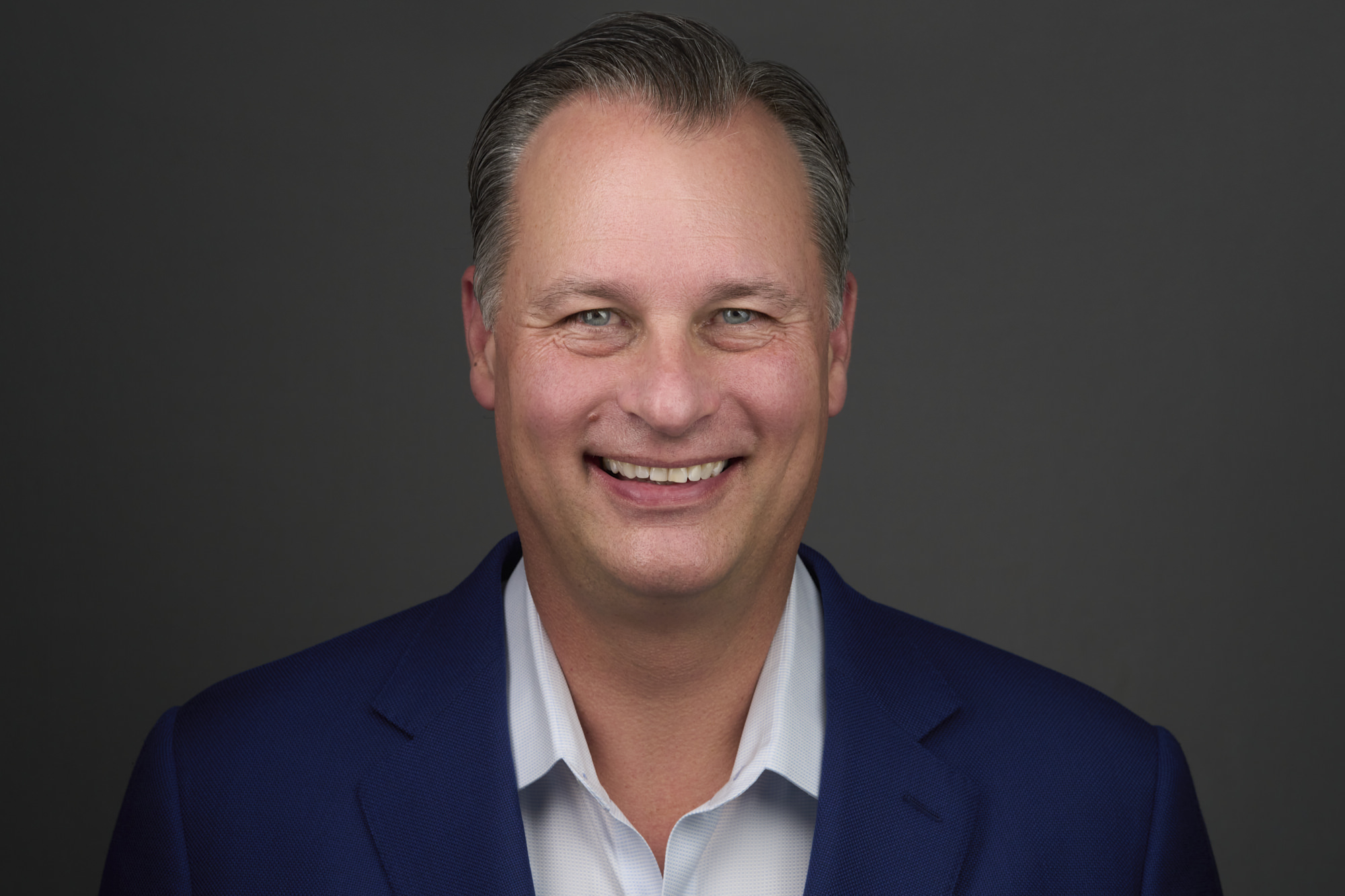
In this episode, Benj sits down with Kevin Short, CEO of ORS Nasco, to talk about life as a master distributor, their four acquisitions in the last two years, and what 30+ years in chemicals, plastics, and industrial distribution have taught him about running a resilient business.
Kevin makes the case for rethinking how distributors and manufacturers allocate capital. He argues the old advice to "spend your last dollar on inventory" no longer holds, and explains why he's on a mission to unblur the lines across the supply chain so every player in it can focus on what they do best.
He also walks through ORS Nasco's PE journey including what he looks for in a sponsor and his "first do no harm" approach to integrating new acquisitions. If you're running a distribution business that's thinking about PE, considering acquisitions, or just trying to sharpen your value prop, this one's worth your time.
Kevin Short (00:00.014)
Think about it from one last dollar. I was told, well, if you have one last dollar to spend, spend it on inventory. Today, I think that that's no longer true. Rather, I think they should spend it either on a salesperson that can solve a customer's problem or some technology that makes them easier to do business with. And if everyone starts to put good inventory on their shelves, that ends up, I think, slowing down the entire supply chain. So we try to be that for both our suppliers and our distributor customers.
and allow them to invest in their companies in different and I think more forward looking kinds of ways.
Benj Cohen (00:37.07)
Hi, I'm Benj, founder and CEO of Proton AI, the AI powered CRM built specifically for distributors. And you're listening to In the Mind of a Distributor, where we interview the smartest minds in distribution. Let's get into it. Kevin, so grateful to have you on the podcast, In the Mind of a Distributor. Kevin, you've got an unbelievable career in distribution. So really excited to dig in to sort of your story, how you ended up in distribution in the first place, how you've grown in the industry.
and then also talk more about your private equity experience, because you've got a lot of recent experience working with private equity. ORS did a transaction a number of years ago. So excited to dig into that too. So thanks again for doing this. Really appreciate having you on.
Kevin Short (01:20.886)
Glad to be here, Benj. Thanks for having me. Love talking about distribution, each chance I get.
Benj Cohen (01:24.842)
Awesome. Okay, cool. So starting out, we'd love to go back to the beginning. Like, how did you first get into distribution and give us sort of the rundown of how you've gotten to where you are today?
Kevin Short (01:36.632)
Sure. I think like a lot of people that get into distribution, I didn't know what it was. I remember coming home from school at about 19 years old, was unsure with what I wanted to do with my life. And I asked my dad, said, do you have any career advice for me as a 19 year old snot-nosed kid? And he had worked his entire career for a global massive chemical manufacturing business.
And he said, well, son, I call on these things called distributors. I didn't even really know what that meant. And he said, what I can tell you is I call on these people and every day they make money and they have fun. And you tell that to a 19 year old and I was hooked. Of course, what my dad was really telling me is as a global chemical manufacturer, there were so many things going on in the world.
that were impacting their business that were completely beyond his control. Think regulation, think trade, topically think the price of oil, like all these things had outsized impacts on their business and they just had to respond to those things. Whereas distributors are the most resilient companies in America and under any circumstances, good times, bad times, it really doesn't matter a well-run distributor.
can find ways to be successful. So I was very lucky that he pointed me in that direction early on. And I took his advice, spent my first nine years in chemical distribution, my next 17 years in plastics distribution, and then had been blessed to look after ORS NASCO for the last about five and a half years. So this is my 32nd or 33rd year in a wholesale distribution environment.
Benj Cohen (03:30.242)
So is the classic someone else makes more money than I make. That's my grandfather has a saying where he's always like, those guys make money. Like we should, why are we in distribution? We should go to this other business. Some version of that story was how you.
Kevin Short (03:43.734)
Well, I would say that was second for me. I was 19 years old and I heard these people have fun doing it. And I think that was the big hook. was like, I really want to enjoy my work. And it turned out to have been great advice. mean, you know, know, distributors well too. Most of them have smiles on their face, right? Because the opportunity is immense and the opportunity to do something with that is ever present.
Benj Cohen(04:08.45)
would be great to hear about the transitions between the industries that you've served. So chemicals to plastics to now industrial supplies. Now you're a master distributor. You're you moved around industries, moved around sort of exactly where you are in the supply chain. I'm curious, like how different is distribution when you move across these different markets?
Kevin Short (04:28.192)
It's not, it's still a people business first, it's a relationship business second. And if you have talented people that take care of their customers and suppliers, it doesn't matter what the widget is that you're distributing. But the two big shifts that I've had from chemicals to plastics, and then from plastics to industrials, two different reasons for those. The first of which was I followed my mentor from chemicals to plastics. He had made a career shift outside of my family. No one's had a bigger impact.
on my life than this individual. And so when the call came in and said, would you like to accomplish some things in plastics that we had done in chemistry and the chance to work for him yet again, was just a learning and development opportunity that I would not have turned down. So that, that ultimately caused the first industry shift. The second was moving to ORS and I loved the plastics business and I love the people in the plastics business. We'll say while.
Business is never easy. I will say in the size of that market after 17 years, while it's not easy, it might've become a little bit predictable. And here I am now in a tools amongst other things business and I can't even hang a picture straight. So, you know, the idea that there's predictability in what we do today is just so far from the realm of possibility. When they say truly every day is a new day,
When you have hundreds of thousands of products and thousands and thousands of customers, it really is fresh and interesting and new even five and a half years in.
Benj Cohen (06:05.826)
Yeah, makes sense. Would love to dig in more to your journey to becoming a CEO. And it sounds like that this particular mentor was really important. I'm curious how you found the mentor and then were they instrumental in ultimately you deciding you wanted to be a CEO, getting recruited into a CEO position? Would love to hear more about that.
Kevin Short (06:27.266)
Yeah, leadership was always something that I gravitated to even as a kid in sports and all that sort of stuff. so leadership in some way, or form was probably where I was going to end up anyhow. The title itself was nothing that I had particularly aspired to, but I did have great people around me. I had a wonderful mentor that has taught me everything I know.
And if you work hard and you keep your head down and you do the work the right way, it's amazing how opportunities come in and find you. In fact, when I got my first CEO gig, I was only 44, so probably way too young to have the job in the first place. And one day I asked the chairman of that business why he gave me the job. And interestingly, his answer was because you didn't ask for it. The idea that I just lived in the present.
and just did the best job that I could. People said they would notice and I guess they did. But the idea that performing in your current role before you put the cart in front of the horse has served me pretty well. The other thing I can add to that is although I haven't moved around a lot of industries or lot of companies in over three decades, I certainly have moved around a lot inside of those businesses. And I was just a fool that every time the company had a big problem, my hand would go in the air.
and I would volunteer to go fix it. So that created a lot of relocation inside those organizations, but all companies are looking for people who are willing to tackle the hard problems and not shy away from them. That served me pretty well too from a career standpoint.
Benj Cohen (08:03.084)
Make sense. And then jump from plastics to ORS. Can you tell a little bit about the ORS story? was part of Ascendant, right? And then it got spin out and then the Medco merge. Give us the last five years and where you guys sit in the market.
Kevin Short (08:17.976)
Sure. So pencils and paper clips don't have a lot to do with the heavier duty, bluer collar, industrial stuff that we get involved with. And that's both an ORS and a Medco comment. And so as, as the stationary business was in a little bit of decline, smartly, there was a diversification play, which included industrials and the automotive aftermarket. But the similarities were not as great as the differences as it turned out. And then.
It took a little while for everyone to figure that out, but Ascendant carved out both the ORS and Medco businesses in 2019. And so robust process there. Ultimately the successful player was a private equity firm called One Equity Partners. They bought the business in October of 2019. Within a day or two, my phone rang and said, yeah, would you be interested in coming and looking after this business?
And I said, well, I have a lot to learn about two industries, but intellectually the chance to learn two industries for the price of one was just fascinating to me. So after checking out the companies for a short while between kind of Thanksgiving and Christmas of that year, I enthusiastically said yes to the opportunity. Left behind a lot of great people in plastics, many of which I'm still in touch with and rooting for every day. But it was fun to be able to step into a couple of new horizons.
started on January 1st of 2020, 10 weeks before the world turned upside down. So my timing is terrible because Plastics ended up saving the planet within days of me leaving that industry. And then we were trying to figure out what the world was gonna look like through the pandemic. But a lot of leadership lessons that came out of that wouldn't change a thing. But yeah, that's how I got recruited into the role at that point and haven't looked back.
Benj Cohen (10:10.67)
Okay, so you come into the combined entity right before COVID happens. I'm curious, I think people don't get to see what it's like inside a private equity backed business. And so much of our market in distribution today is family owned businesses that may consider a private equity partner. And there's so much consolidation going on. I'm curious, like, put us in your head at that moment. You come into the business, one equity has just made an investment. What's the thesis like?
How are you thinking about managing both businesses? And then how did that transpire as COVID changed everything after you joined?
Kevin Short (10:44.95)
It doesn't have a lot to do with the sponsor themselves, right? There's just good business fundamentals that were clearly in play. I took it upon myself to make a lot of changes inside our leadership team and flooded the company with people that came from different robust distribution walks of life. It was important to me because we only sell to distributors, right? As a pure wholesaler, we're very comfortable in those shoes.
And I thought for us to be successful, both at Medco and at ORS, we needed to have more people in leadership positions that had walked some miles in those customer shoes. I'm a lifelong distributor who's only recently fell into wholesale. I recruited a lot of other outstanding people from different really top-notch distribution companies, figuring if we had maximum empathy and understanding of the client.
we would eventually have all the success that we wanted to have, whether the pandemic was a short-term wet blanket on that or not. You still need to do a 10 to the fundamentals of the business, starting with talent, and then you get after doing the blocking and tackling of wholesale distribution and better. And that pretty much defined the first sort of year and a half on the job.
Benj Cohen (12:03.64)
So leadership team changes, I'm curious, what were some of the other highest priority changes on the blocking and tackling side? How did you go about assessing what those were coming into the business and then executing them in a way that sort of brought everyone along for the journey?
Kevin Short (12:17.526)
Yeah, you never quite get there Benj. You're always trying to improve your business. You know, there are no destinations on that kind of improvement track, but the best way to figure out where you are on the right track and when you're not is to get out in the field. I guess in June of 2020, I started traveling again after everybody had hibernated there for a few months. And I travel every single week. I have for 30 plus years of my career figuring if you get closer to the customer, they'll tell you.
where you're on the right track and where you're not. Distributors aren't shy individuals and you just got to give them an opportunity to make you better and they will. Getting out in the field, asking those questions of where are we doing right? Where can we be better, stronger, faster? And how do we make those better? Through the eyes of the customer, I find to be just that much more effective than trying to figure that stuff out from the comfort of your own boardroom.
Benj Cohen: One question I've had about ORS's history has been, how you guys have sharpened the value prop and the clarity around your value prop to customers. Like it's so clear to me how ORS can help a distributor. When you came into the business, was it as clear as it is now? I feel like I've heard you speak at so many events now where you explain, here's exactly where we can fit in and here's how we help you supplier. Here's how we help you customer. We'll never compete with you as a distributor. Like they just so clear where you guys fit. Was it so crystal clear when you came into the business?
Kevin Short (14:19.434)
It wasn't. And part of that was clarity. Part of that was communication of the clarity. starts from pure wholesale for us. Every single dollar and every single cent that we get, the opportunity to distribute goes to distributors in order to help them delight the end user. We don't spend any time or energy or money competing with our customer base. That's not new, but customers said, we think that's true of the business. We just hadn't heard enough about it lately. And so...
That wasn't a change in the business as much as a communication strategy to reinforce that was where we were going to live. That was a big part of that journey. Secondly, we used to go to market, I would say one way and try to engage distributors one way. We now think a little bit differently about different kinds of distributors, require different kinds of things from us. And we have molded and tailored our value proposition.
a little bit more around what's going on in their world, as opposed to trying to fit that into what's going on in our world. And then maybe the biggest part of that, and this is something you've heard me talk about a lot the last, two years, is I'm on a bit of a mission to try to unblur a lot of the lines that have been unfortunately blurred across the entire supply chain over many years. And eager people wanting to say yes to lots of other people end up getting themselves...
into activities and commitments that aren't necessarily in the real house. And I think if we can roll back the clock a little bit and get back to basics and have every step of the supply chain perform the key functions that are required of them at an expert level, as opposed to dabbling in a lot of other people's sandboxes and do all that with an assist from technology to modernize the approach. I think everyone ends up being more successful and everybody ends up making a little bit more money.
The way I've been describing this in some of the speaking opportunities I've had is think about it from one last dollar. If a company has one last hour to spend, when I started in distribution in the mid 90s, I was told if you have one last hour to spend, spend on inventory. Today, I think that that's no longer true because you have options like ORS NASCO. I think a distributor that has one last hour to spend should not.
Kevin Short (16:45.694)
spend it on inventory. Rather, I think they should spend it either on a salesperson that can solve a customer's problem or some technology that makes them easier to do business with. But it also equally applies to the manufacturing community. If a manufacturer has one last hour to spend, they should not spend it on finished good inventory. They should spend it on R &D and NPIs.
and getting their product on specifications at the end user, again, leaving the inventory investment dollars to us. And if everyone starts to put finished good inventory on their shelves, well, that ends up, I think, slowing down the entire supply chain. So we try to be that for both our suppliers and our distributor customers and allow them to invest in their companies in different and more forward looking kinds of ways.
Benj Cohen (17:39.82)
I want to pivot to talk about the last transaction you guys did with ORS, not an acquisition, but where you guys sold the business from One Equity to Windchurch. Take us through what that process is like. Sometime at a board meeting, it's decided that we're going to sell the business or go through some kind of process. What are the steps? Do you work with a banker? How do you pick the bank? Take us through that whole process and how you think about selecting the right partner, the whole thing.
Kevin Short (18:08.43)
So in the interest time, I'll try to give you the Cliffnote version because it was a nine month process. Yes. From the time that we decided to bring ORS to market to the time that we closed with our current sponsor, Windchurch. I can say for certain that I did my day job very poorly that year because it is an all consuming process. It was very flattering. We had a lot of interest in our business, both from strategics and from some equity players.
And a lot of people were taking a look at our company, which added time to the process. Yes, we had a banker that was jointly selected between the business and the sponsor. They did an excellent job kind of marketing and helping guide us through that process. And really by the summertime, we were down to a handful of finalists and couldn't be happier with where we ended up. Windchurch has been a terrific partner.
They've always had wholesalers or distributors in their portfolio. So they really do get the value proposition that we believe in so intensely. And obviously the fact that we've been able to do four deals in the early innings with our new sponsor shows that they're very willing to invest in our future.
Benj Cohen (19:25.966)
Yeah, makes sense. In that kind of process, how much say do you have as the CEO versus the, you know, one equity, the original private equity sponsor over who the next investor is? And again, I'm the perspective I'm coming out of from is raising venture dollars, right? Where, you know, it's there. You run a process and you sort of end up with it with a number of potential partners. And there's factors like the valuation, also
other factors outside valuation that matter to picking the right person. And I'm curious, like how much influence you have over that or how much those non deal term related elements impact how you think about selecting a partner.
Kevin Short (20:07.788)
I'm sure every process has a slightly different experience and answer to that. I would say that both One Equity and the leadership team at ORS were very aligned that Windchurch was the right place for us to end up. So there was no conflict in that whatsoever. I think we all thought that was the right destination for the business. Ultimately, it's the sponsor's decision, right? Influenced by the leadership team. But if somebody was going to pay us...
a significant amount of money more than somebody else. That's probably where we might've ended up. But the important thing I think is to watch what happens with the leadership and the fact that so many of the leaders that were previously looking after the business are all still very much looking after the business. And our ability to have the continuity for our customers and our constituents has been incredibly important to the success of the business.
Benj Cohen (21:00.942)
Yeah, yeah, it makes that kind of sense. I want to dig into the acquisitions that you guys have done. So obviously you've done four in the last two years, which is super significant. How did you identify these businesses? Were there deals that you looked at that you were excited about that didn't work out for what reasons? Curious to hear more about how you identified the acquisitions that you did end up doing and how it's gone integrating, et cetera. Sure.
Kevin Short (21:23.756)
Yeah, four great deals, four very different businesses, but all of which align with some or all of our strategic planning. All of these businesses, certainly by the end of 2021, so by the time I was in the seat for two years, had already had conversations with these organizations. So these were not new ideas. We were just able to action them in more recent times.
And you just never know, especially with family businesses, if or when they are ready to do a deal. And so if you think your close rates are difficult in sales, your close rates in the and A game are much, worse. And so you have to be patient. You have to be committed. And when the companies are ready to sell, you have to be ready to be a buyer. You can't do that in the inverse order. If a company is not ready to do a transaction, no transaction will happen. And so.
Some of this work had been marinating for three, four, even five years. That's okay because we're in this game for the long haul and you get more time to be sure that it's a strategic fit, that it's a cultural fit, and that ultimately it makes sense for everybody. And if it makes sense for the customer, it's probably a good deal. So each of the four brought a little different answer to that, but all four of them we looked at through the eyes of the customer and said, is this something that could be helpful to them?
And if so, that was something we were very excited to invest in.
Benj Cohen (22:55.064)
So organizationally, who runs these integrations? Did you have to bring in talent for that specifically?
Kevin Short (23:03.136)
Yeah, the integrations we do in-house, they're multi-layered, right? You have cultural integration and then you have customer and supplier integration and you have product and assortment integration. You have distribution center integration and ultimately you have technology integration. These things take a lot of time. Of the four deals we've done today, only one resides on our core ORS ERP system. We'll probably only get one or two of those.
also into our ERP before the end of the year. I think the important thing when you do a deal is to first do no harm. And I think some people get going too fast in this area and I'd much rather do it well than do it rapidly. And so in time, of course, we want to give our customers a chance to make one phone call, acquire all this stuff, unload one truck, make it incredibly easy for them to build to just a $1,500 prepaid freight order.
and pay one bill. We will get there. We are there with the R3 business. We will get there with some of these others in time. We think that's some convenience that I had mentioned earlier that our distributor customers will reward us for. But today it's important to recognize that these are very successful companies doing very good work. And we don't want to, in the interest of being hasty, we don't want to undo a lot of that good work that already exists. So we're being careful and thoughtful about what integration looks like.
We don't have to do it rapidly, but we do want to do it well.
Benj Cohen (24:33.996)
Yep. Yeah, makes sense. And on that point, how have you thought about retaining talent after the acquisition has occurred? It's obviously always a challenge.
Kevin Short (24:43.31)
It's a challenge if you let it be a challenge, but if you start with a cultural fit, it becomes less of a challenge. If you're buying businesses that are fairly significantly smaller than the core business, know, what it turns out to be is we've now given lots and lots of ultra talented associates that have come in through these four deals, some very significant career runway, being able to play and think about their career on a bigger stage.
And so the people that were running those businesses are still with those businesses. They're all making a big impact, not just in terms of their core jobs, but many of them are starting to make an impact back towards ORS and making ORS better, smarter and faster. And so we don't make the stuff Benj. And so if we can't hold on to the talented people that we have access to, that's a real problem. so spending time to be sure that they have an A plus experience.
working in the company and that we care about themselves and their careers. We care about their safety and their longevity. We care about helping them improve their own family lifestyles. It has allowed us to hold on to many of the people that came through these deals. And I can't wait to see what some of them do in terms of making an impact on the larger stage.
Benj Cohen (26:00.706)
Yep. Yeah, that's awesome. Curiosity is one of our biggest values at Proton. After a long career in distribution across three different markets, what's one thing that you're still curious about or trying to learn?
Kevin Short (26:14.35)
There's so much curiosity in our company is also one of the four pillars we look for when we flood the company with talent. We talk every day around here about likability, tenacity, curiosity, and humility. So maybe one of the reasons that our company is aligned so well is around that curiosity point. Yeah, I still have a lot of years left to me in distribution. Thank goodness. Cause in many respects I'm still learning and I'm still trying to continue to hone my own leadership journey, but.
two come to mind for sure. One is you guys are helping us with is the whole world of AI technology and how it can be an assist to the business. And so, yeah, I'm incredibly curious about that. I have a lot to learn about that. I'm fascinated by what that might look like for the balance of my career. But then for me, the biggest curiosity point comes back to the people, right? How can I become the best leader that they
deserve in order to be sure that I think about a human condition, what people are looking for from their employer. And ultimately, how can I put nearly a thousand people in a position to be wildly successful and understanding what makes each and every one of them tick, put them in a position to be successful and have a career beyond their imagination. so that's a different answer for a lot of different people.
And without curiosity, I don't think he ever asked the right questions or get to those answers.
Benj Cohen (27:45.314)
Yes, and that the second point I think will be a curiosity forever. Like, are infinitely curious.
Kevin Short (27:51.65)
People require that of you, right? Yeah, it's just fascinating.
Benj Cohen (27:54.978)
Yeah. Awesome. Well, Kevin, thank you so much for doing this. Really appreciate having you on. That's it for this episode of In the Mind of a Distributor. If you like this conversation, leave a review. It helps more folks in distribution find the show. If you're thinking about a CRM for your business, head to proton.ai to see how Proton can help you grow faster. Or if you want to connect with me, you can add me, Benj Cohen, on LinkedIn. Thanks for listening and I'll catch you next time.
Kevin Short
President and CEO of ORS Nasco
A life-long distributor, Kevin has devoted 30 years to the chemical, plastic, automotive, and industrial sectors. Since 2020 he has served as the President and CEO of ORS Nasco – an industrial wholesale distributor offering access to more than 200,000 products from more than 600 brands in the industrial, welding, oilfield, safety, electrical, construction, plumbing, janitorial and rental markets. Prior to that, Kevin was the President and CEO of Polymershapes – the leading performance plastics distributor across the Americas. He proudly volunteers on the Executive Board of the National Association of Wholesaler Distributors as they advance the interests of distributors of all sizes across all industries. He is a graduate of Emory University. Kevin, his wife Lisa, and their three children reside in Charlotte, North Carolina.
%20(1).png)
Running a master distributor | Kevin Short of ORS Nasco
Six lessons from ORS Nasco CEO Kevin Short on inventory strategy, supply chain lanes, M&A discipline, and where modern distributors should put their next dollar.
Never miss an episode
Lessons from the front lines of distribution—one honest conversation at a time

%202.svg)
%201.svg)
.png)
%20(1).png)