
Stop typing quotes.
Start sending them.
AI that turns any inbound request into a ready-to-send quote or order, with your sourcing logic, contract pricing, and customer history already applied.
Built for distributors on the same platform as Proton CRM, PIM, and eCommerce AI.
15 min → 3 sec
What a manual quote used to take. What it takes now.
90%
Match rate accuracy across thousands of SKUs
100,000+
lines processed in one day


You're paying people to type.
Every day. On repeat.
Today a customer emails you: "We need 12 of the ½-inch brass fittings, 8 check valves, and a quote on 50 feet of ¾ copper."
To respond, someone has to open Outlook. Then the ERP. Next they have to look up the customer number, search for the first product, enter the quantity, search for the next, check inventory, check pricing, build the quote, submit, then flip back to Outlook to reply.
Fifteen minutes. For one email.
And if your team is handling fifty of those a day, that's hours of skilled labor spent on pure data entry, before you even factor in the mistakes that come with doing it manually at volume.
That's a significant slice of your headcount doing nothing but reading requests and typing them into a system. It's slow, it's expensive, and it's error-prone. But it's been the cost of doing business in distribution. Until now.
Proton reads incoming requests across any channel, matches the products to your catalog, and builds the quote or order automatically. Your team just has to review and approve, and then it's in the ERP.
The whole thing takes under a minute, with no manual entry required.
Margins in distribution are thin. Labor costs aren't. This is one of the fastest ways to close that gap.


Benj Cohen
Founder & CEO, Proton
4th generation distributor @ Benco Dental
What is AI order and quote entry automation?
AI order and quote entry automation reads incoming customer requests like emails, PDFs, handwritten lists, or spreadsheets, and converts them into ERP-ready orders and quotes without manual typing. The AI matches each item to the distributor's catalog using cross-reference, pricing, and inventory data, then routes a draft to a rep for review.
Order entry has stayed manual because the inputs are messy. A customer emails "the thing we ordered last March." Another sends a PDF with a competitor's part numbers. A third snaps a photo of a parts list scrawled on a work order. Every one is a real order worth real margin, and every one lands on someone who has to decode it by hand. Generic tools that just scan and digitize can't handle that. Distribution-specific AI can.
Proton’s AI was built for these inputs. It learns your catalog, your customers’ nicknames, and your reps’ editing patterns over time. The output is a draft quote or order with the right products, pricing, and inventory check. It also applies your contract pricing and your sourcing rules, so the draft lands on the right price and warehouse before it reaches the rep. That is the difference between a tool that reads a PO and one that produces a quote you can actually send.
Automate every quote and order, start to finish.
Quote in seconds, not minutes
Customers send a part number, a vague description, or 'the thing we ordered last March.' Proton drafts the quote in seconds, with pricing, availability, and alternatives ready to go. And being first matters: the supplier who responds first usually wins the deal, even at a slightly higher price.
Drafts your logic, not just part numbers
Anyone can match a part number. Proton applies your contract pricing, follows your sourcing rules, and picks the right warehouse, so the draft is ready to send, not just ready to fix. Most tools read the request and stop there. Proton keeps going through the work your reps would otherwise do by hand.
New hire? Doesn’t matter.
Real-time product recommendations, smart pricing, and instant alternatives mean your newest hire supports customers with confidence. No tribal knowledge required.
Turn more quotes into orders
Most quotes die in follow-up limbo. Proton keeps every opportunity visible, reminds reps when to re-engage, and makes it simple to turn "let me think about it" into a PO.
Customer request comes in. Quotes and orders go out.
The request comes in
Email, a handwritten list, a PDF, a spreadsheet, a web form. Any format, all funneled into one review queue. No templates, and nothing your customer has to format differently.
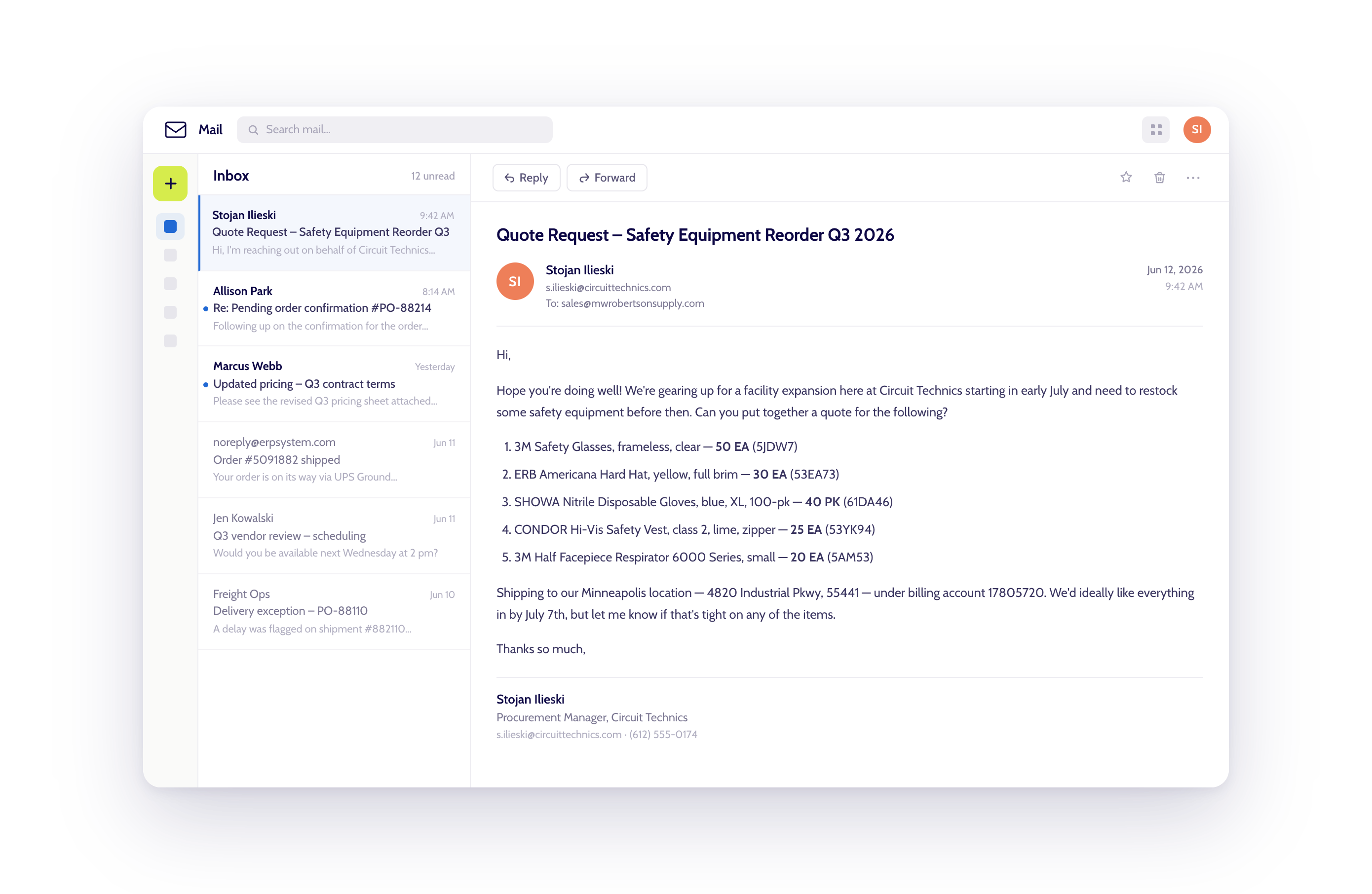
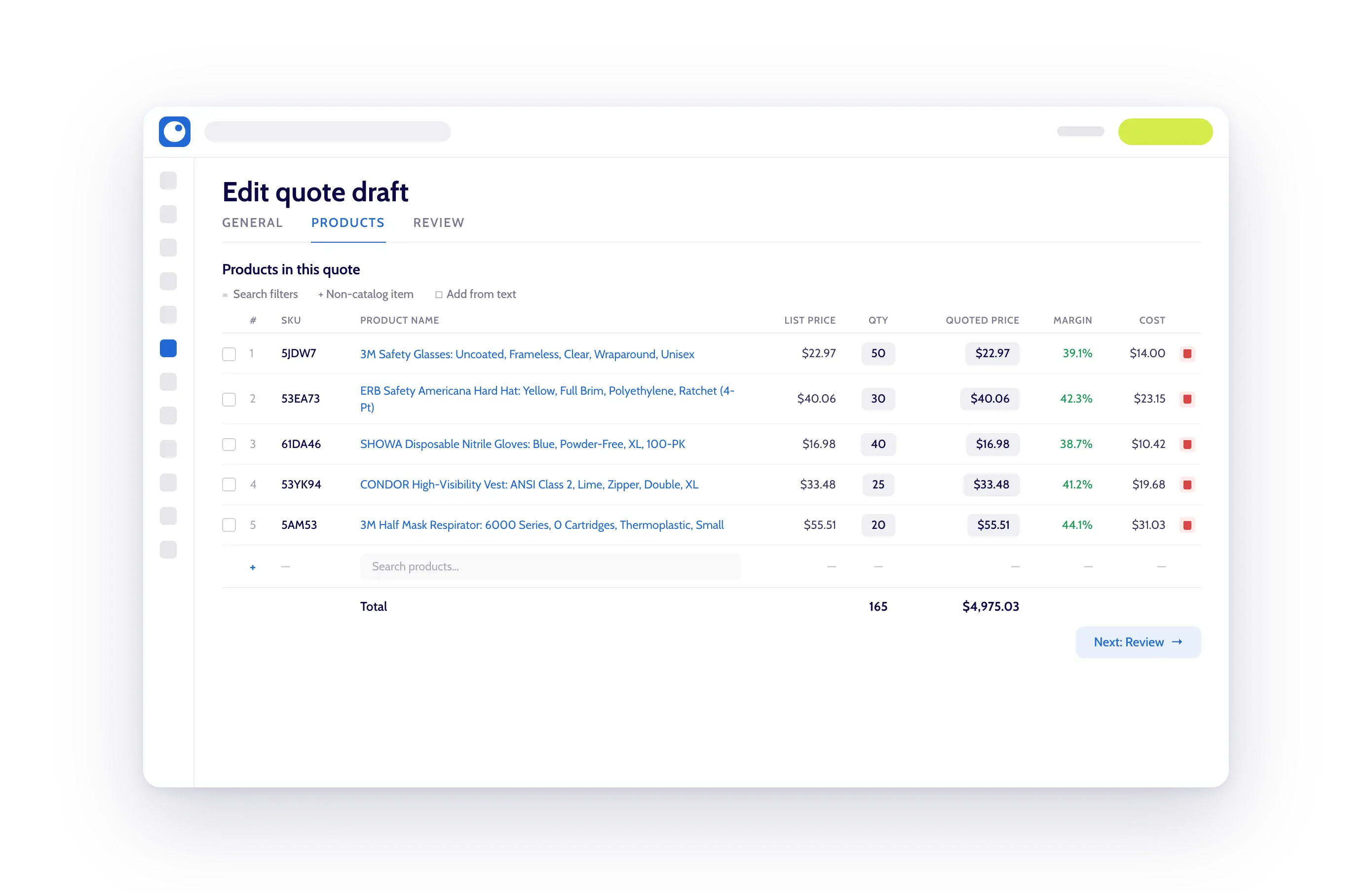
Proton reads it and matches every line.
It interprets vague descriptions, competitor part numbers, and "the same thing we ordered last March," then maps each item to the right SKU in your catalog. The messy input becomes a clean, structured order.
Your pricing, sourcing, and inventory get applied.
Contract pricing for that customer. Your sourcing rules, so each line pulls from the right warehouse. Branch-level availability, with substitutes surfaced when something is out of stock. What reaches the rep is a complete draft, not a starting point.
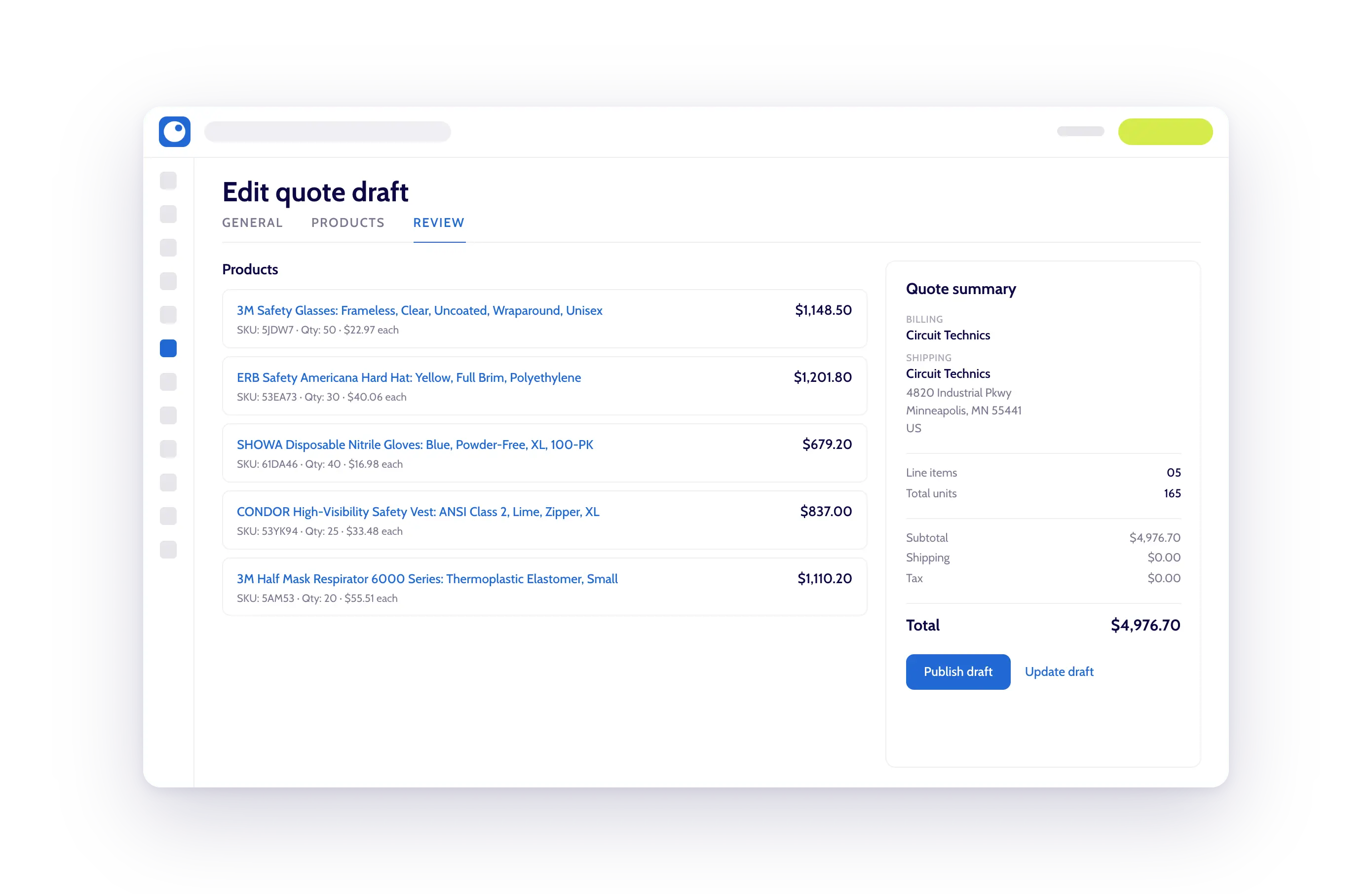
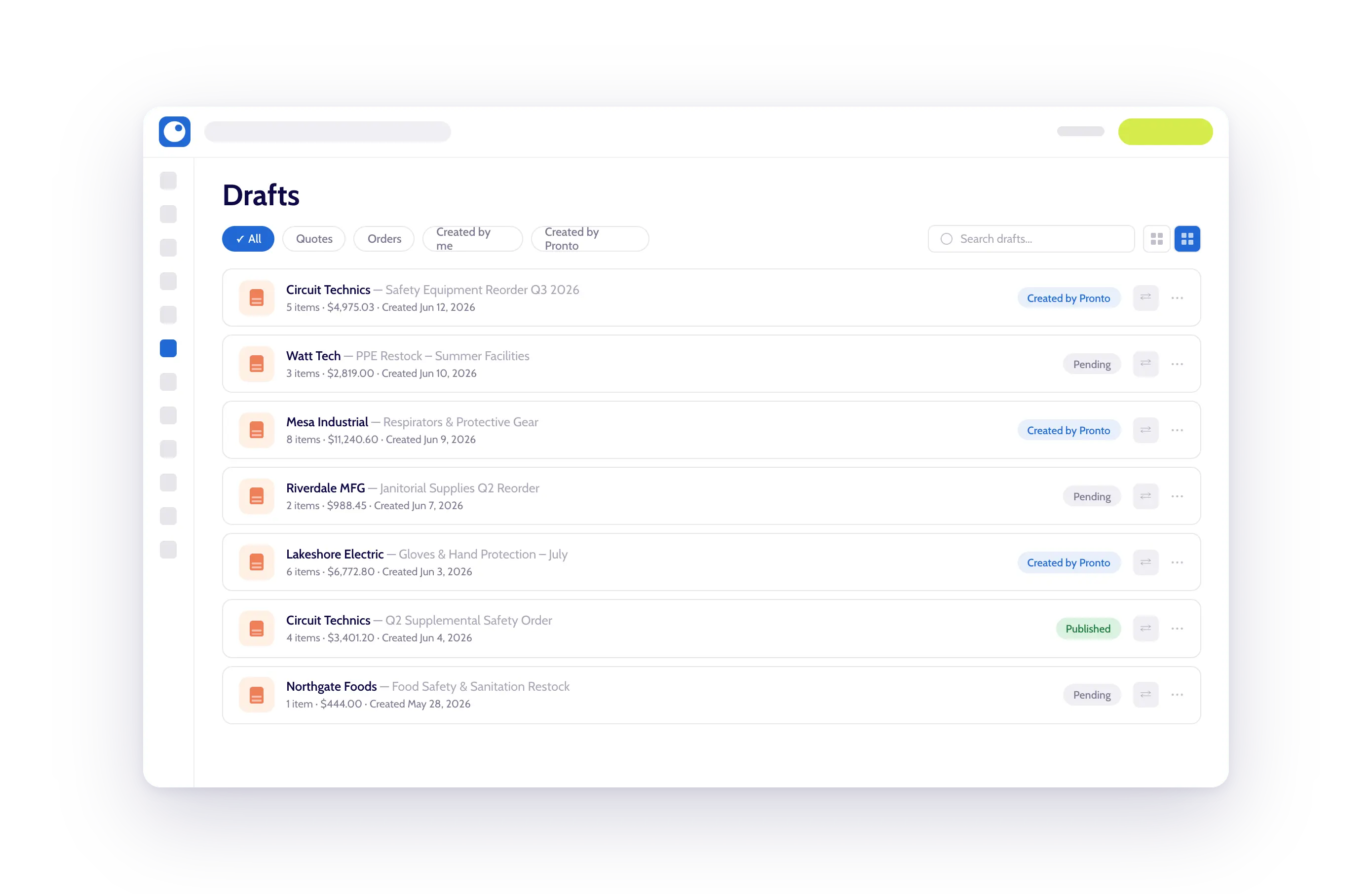
Your rep reviews and approves.
The human stays in control. Proton flags anything it is not confident about so the rep can confirm it, then the approved quote or order posts straight to your ERP in seconds, fully logged for audit.
Get a quote or order ready in just a few seconds.
Handles any input format your customers send.
Your customers don't send tidy purchase orders. They send what's fastest for them. Proton processes whatever comes in.
Email body text
Natural-language requests with line items mixed into the message.
PDF attachments
Purchase orders, RFQs, takeoff sheets, project specs.
Spreadsheets
Excel, CSV, Google Sheets with hundreds or thousands of line items.
Handwritten notes
Counter sales scans, photos from the field.
Competitor part numbers
The cross-reference engine maps equivalent products from any manufacturer to your SKUs.
Web forms & EDI
Structured channels feed the same review queue as everything else.
Built for inside sales, counter sales, and the field.

Inbound queue, drafted before the rep opens it.
Inbound emails turn into drafted quotes by the time the rep opens them. A 400-line spreadsheet from a contractor gets matched in minutes instead of two days. Quote follow-up runs on autopilot so deals don’t sit in limbo.

Dictate from the field. Quote on the drive home.
A maintenance manager emails from a plant floor with a parts list. The rep dictates into Proton from their phone. The quote is ready to send by the time they’re back in the truck.

Change orders. Re-quotes. No re-keying.
Order changes, add-ons, and re-quote-with-this-swap requests run through the same workflow. No re-keying.
How Proton compares to other order entry tools.
The only order entry tool that gets smarter as your other systems do.
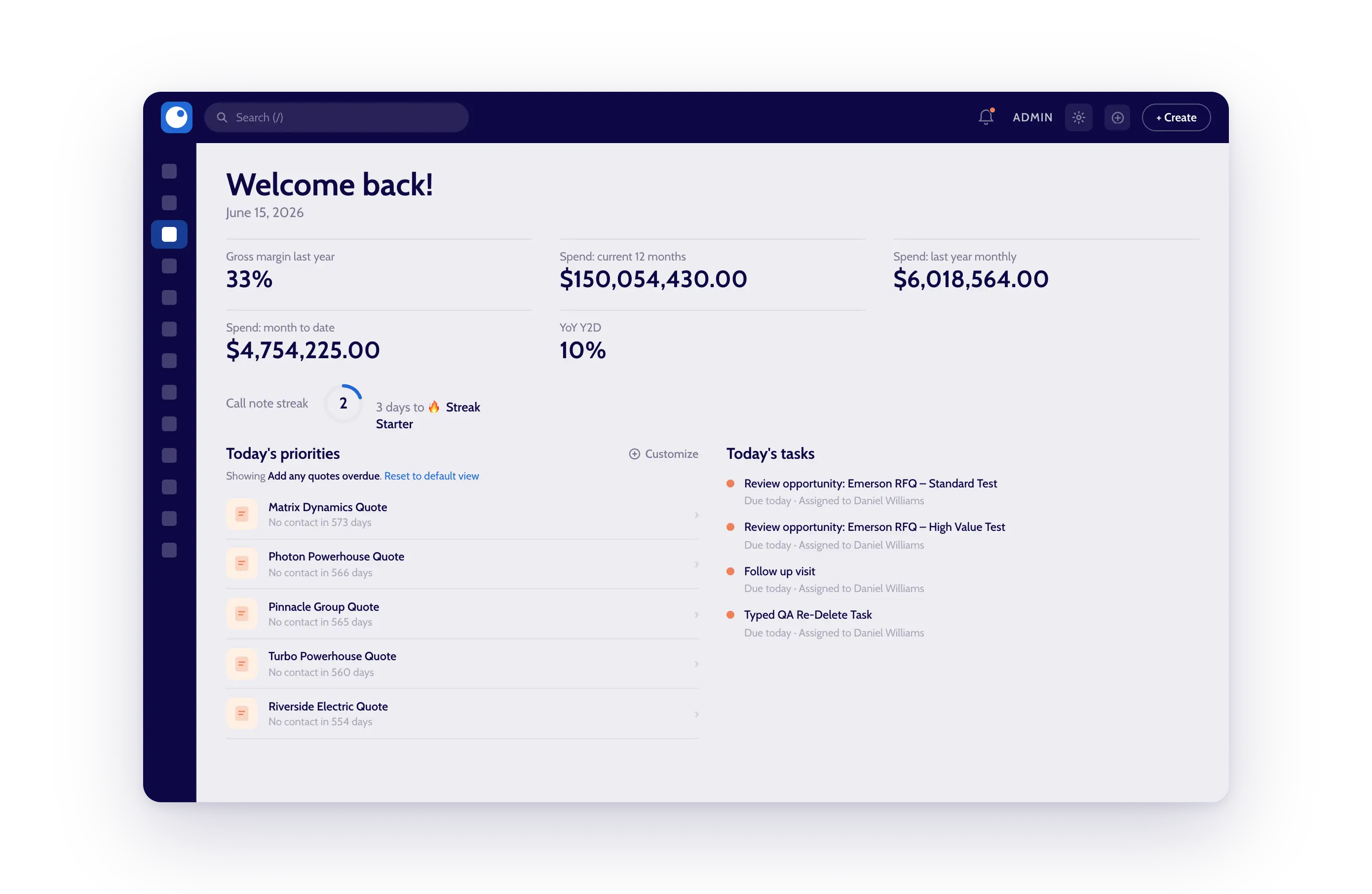
Proton CRM tracks every account's order history, contacts, and buying patterns. Order and quote entry reads from it automatically, so each draft arrives with the right customer, pricing tier, ship-to, and last-purchase context already attached.
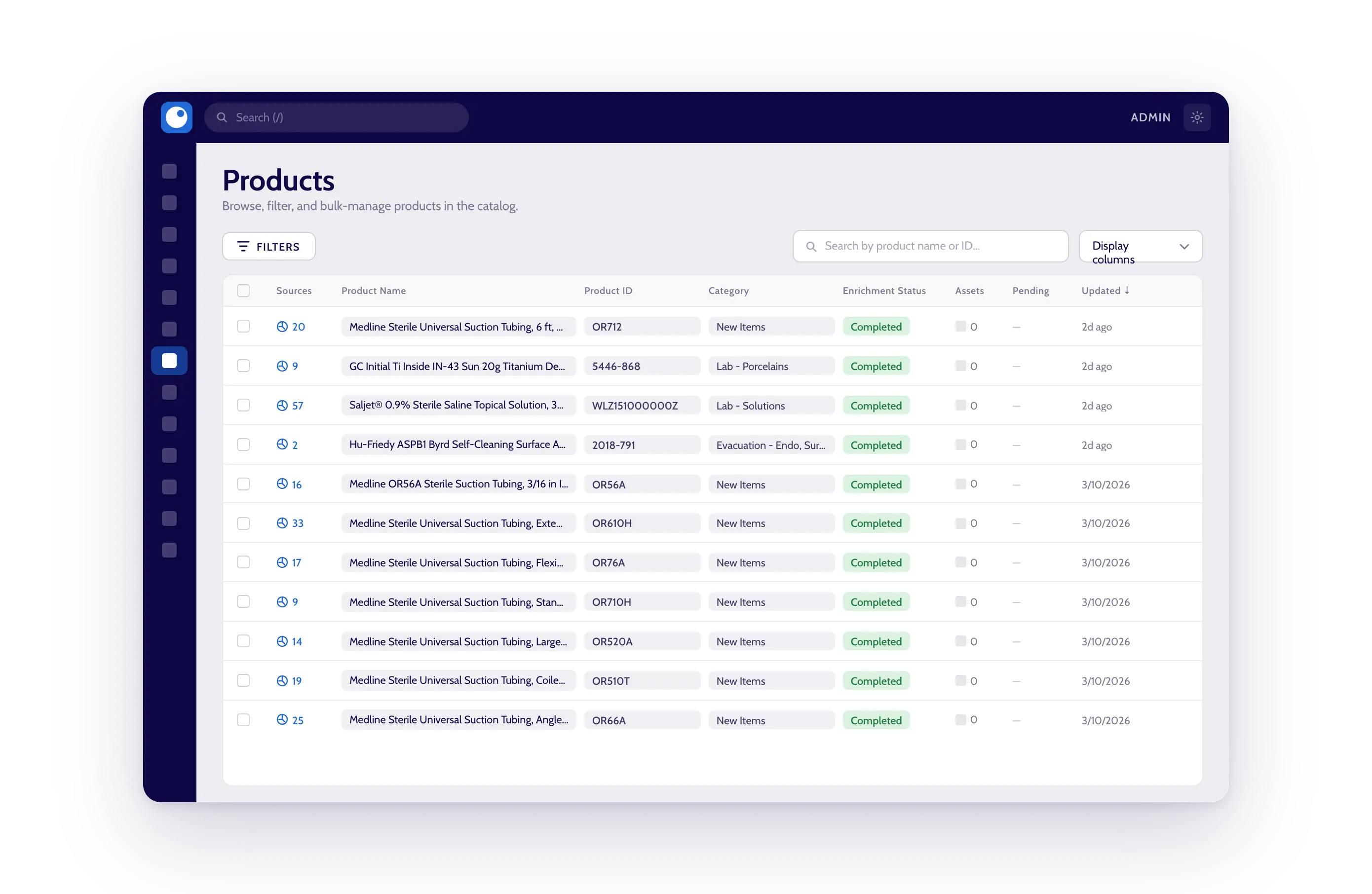
Proton PIM keeps your catalog clean, enriched, and consistently structured. Order entry matches incoming requests against that catalog, so the better your product data gets, the more accurate every draft becomes.
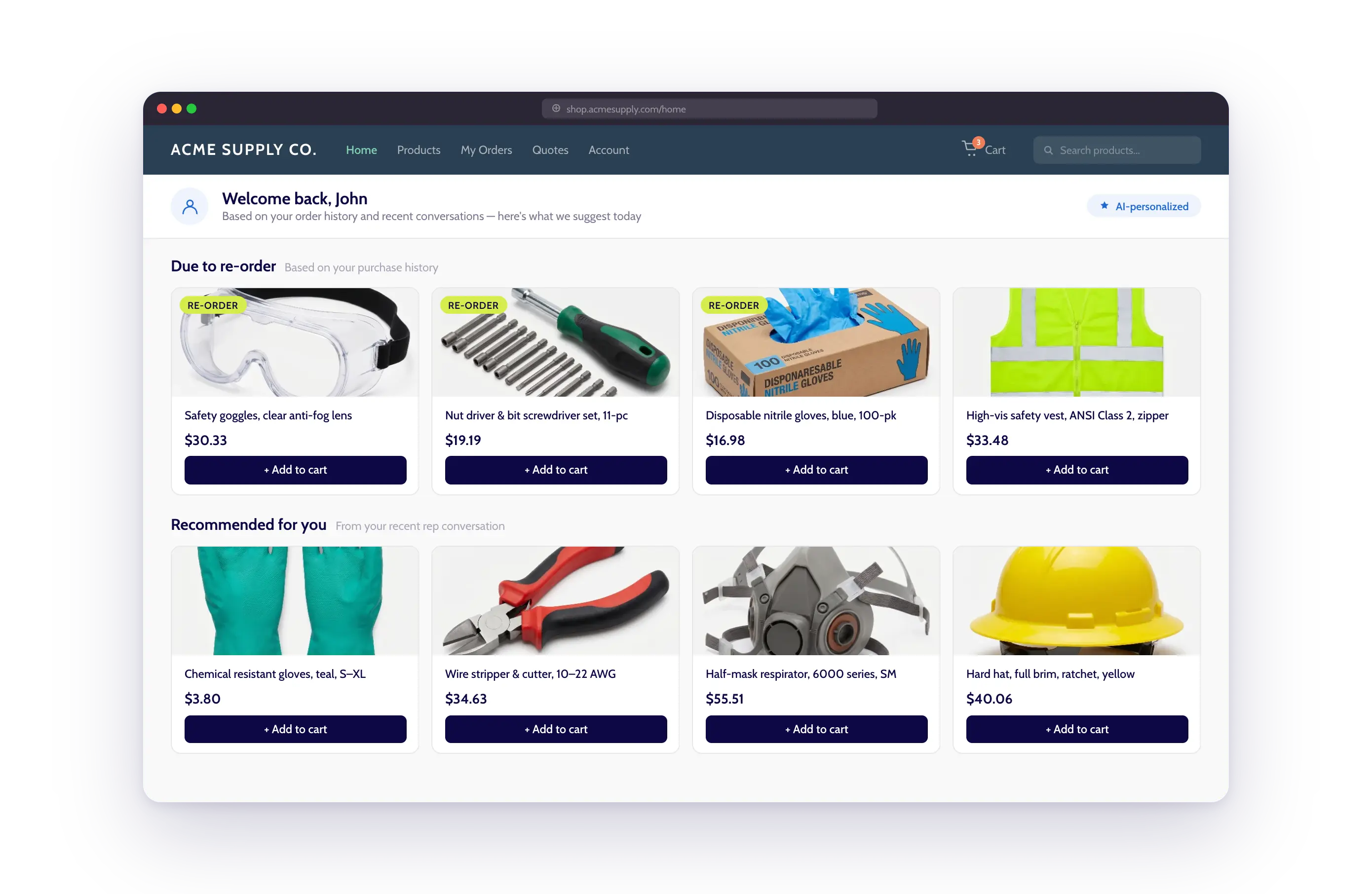
Proton eCommerce AI learns what your customers browse and buy online. Those signals feed order entry, so every draft can surface the right cross-sell and the best in-catalog substitute when something is out of stock.

Most order entry tools live as a standalone box bolted onto your ERP. Proton's order and quote entry sits on a shared data foundation with Proton CRM, Proton PIM, and Proton eCommerce AI. That changes the economics.
What changes when distributors automate quote and order entry.
Here's what we're seeing from teams using Proton AI.
15 minutes to as low as 3 seconds per quote.
first-time match rate on cross-referenced parts.
the amount of lines in quotes that can be generated in one day
match-rate accuracy across thousands of SKUs
reduction in cost per order, moving from manual entry.
See what your team will acheive
For distributors processing high volumes of inbound RFQs and orders. Get pricing, implmentation info, and ask any question to start your journey.
Works with the ERP you already have.
No re-keying, and no mangled data. Proton's connectors are pre-built for the major distribution ERPs, so your records are already mapped to the right fields. Quotes and orders come back fully structured: right customer, right ship-to, right pricing tier. Each one lands as a complete order, the same as if a rep had keyed it in by hand, minus the manual work and the typos. Audit trails stay intact.
Enterprise-grade security and privacy
Proton protects your data with the highest standards. We're one of the only distributor software platforms with SOC 2 Type II compliance. That's why we're trusted by IT teams and ready for even the most rigorous security reviews.


Order entry is one piece of the platform.
Proton CRM
Turns order-takers into order-makers. AI tells reps who to call, what to pitch, and when.
Proton PIM
The only PIM that enriches your catalog and manages your taxonomy with AI.
Proton eCommerce AI
Personalized website recommendations powered by your full order history.
Questions? We've answered these a lot.
Have more?
Learn more about quote and order entry




Get trusted playbooks from leading distributors
Sign up for our monthly newsletter to get interviews with top distribution leaders, distilled into key takeaways you can read in 5 minutes or less.